

The “Pause Before You Respond” Rule: A Simple Way to Spot Scams Before They Go Too Far
Scams are getting harder to recognize.
They do not always look like obvious spam emails, strange phone calls, or messages filled with typos anymore. Sometimes they look like a normal text from a delivery company. An alert from your bank. A fake invoice. A message from what appears to be a familiar business. Or even a request that seems to come from someone you know.
That is what makes them so frustrating — and so effective.
One of the simplest ways to protect yourself is also one of the easiest to remember:
Pause before you respond.
Not forever. Not in fear. Just long enough to slow the situation down and ask, “Does this make sense?”
That small pause can make a big difference.

Scams Are Designed to Make You React Quickly
Most scams work because they create pressure.
They make you feel like something bad will happen if you do not act right away. Your account will be locked. A payment will be missed. Someone you love is in trouble. A delivery cannot be completed. A computer problem needs immediate attention. An invoice must be paid now.
The details change, but the goal is usually the same: get you to react before you have time to think.
And it is important to say this clearly — falling for a scam, or even almost falling for one, does not mean someone is careless or gullible. These messages and calls are designed to be convincing. They are designed to catch people at a busy, stressful, or vulnerable moment.
That is why the pause matters.

What It Means to “Pause Before You Respond”
The “pause before you respond” rule is simple.
Before you click a link, send money, share personal information, provide a verification code, or give someone access to your device, stop and verify.
That may mean waiting a few minutes before replying. It may mean calling the company directly using a phone number you know is real. It may mean asking a family member, friend, or trusted professional to take a quick look before you do anything.
The goal is not to become suspicious of everything. The goal is to build in a little breathing room before responding to anything that feels urgent, unusual, or emotionally charged.
When to Be Extra Careful
There are certain moments when it is especially important to stop and double-check.
Pause if someone asks you to send money right away.
Pause if they ask for payment by gift card, wire transfer, cryptocurrency, payment app, or any method that feels unusual.
Pause if they tell you not to tell anyone else.
Pause if a message asks you to click a link and enter your password, Social Security number, bank information, or verification code.
Pause if someone calls claiming to be from your bank, a government agency, a utility company, tech support, or a company you recognize — especially if you were not expecting the call.
Pause if someone claims to be a family member in trouble and needs money immediately.
Pause if you receive unexpected payment instructions related to a home sale, home purchase, repair, invoice, or financial account.
Often, the biggest warning sign is the feeling that you are being pushed to act before you can think clearly.

How to Verify Without Making It Complicated
Verifying does not need to be a big process.
If you get a text or email from a company and something feels off, do not click the link in the message. Go directly to the company’s website or call a phone number you already know is legitimate.
If someone says they are calling from your bank, hang up and call the number on the back of your card.
If someone says a loved one is in trouble, call that person directly or check with another family member before sending money.
If you get new payment instructions for a real estate transaction, home repair, invoice, or financial account, confirm them by phone with a known contact before taking action.
And if someone asks for a verification code, do not share it. Those codes are meant to protect your account.
When in doubt, ask someone else to look at it with you. A second set of eyes can often catch something that is hard to see in the moment.
Why This Is a Family Conversation, Too
Scam prevention is not just about technology. It is also about communication.
A lot of people feel embarrassed when they click something suspicious, answer a strange call, or almost send money. That embarrassment can keep them from telling anyone — and scammers know that.
That is why it helps to talk about scams before there is a problem.
A simple family rule can go a long way:
If anything feels strange, urgent, or confusing, pause and check with someone you trust.
That kind of conversation can be especially helpful for older adults, homeowners, adult children helping parents, or anyone going through a major life transition. Selling a home, downsizing, managing repairs, handling paperwork, or helping a loved one make decisions can bring a lot of emails, calls, invoices, and unfamiliar requests.
That does not mean people need to be afraid. It just means it is worth having a plan.
A Simple Rule That Can Help
One helpful rule is:
No urgent money decisions without a second opinion.
That does not take away anyone’s independence. It simply creates a safety step.
Before sending money because of an unexpected call or message, check with someone. Before changing payment instructions, verify directly. Before giving remote access to a computer, make sure the request is legitimate.
Scammers want people to feel alone and rushed. A quick conversation with someone else can break that pressure.
The Bottom Line
Scams are constantly changing, but many of them rely on the same basic tactic: pressure.
They want you to move quickly, keep quiet, and respond before you have time to think.
So give yourself permission to slow down.
Pause before you click.
Pause before you pay.
Pause before you reply.
Pause before you share information.
That small pause can give you time to verify, ask questions, and avoid a costly mistake.
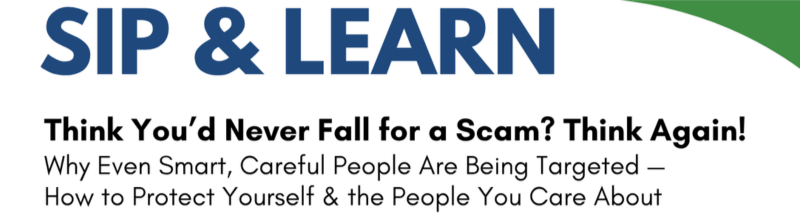
Learn More at Our Upcoming Sip & Learn
Because scam awareness has been such a highly requested topic, The Lutkins Group is hosting a free evening Sip & Learn on scam awareness and prevention with Charles Chrosniak III of Petratek Information Technology.
Join us Wednesday, July 8, at Venture X Brambleton for a practical conversation on common scam tactics, red flags to watch for, and ways to better protect yourself and the people you care about.
Drinks and light appetizers will be provided. Space is limited, and registration is required.
Register here: https://forms.gle/2uhcq61LGiaA7Cg3A
Categories
Recent Posts