
Can Technology Make Aging in Place Easier?

Can Technology Make Aging in Place Easier?
For many older adults, the goal is simple: to continue living safely, comfortably, and independently in the home they know.
The National Institute on Aging describes this as “aging in place”—remaining in your own home as you grow older. Achieving that goal often requires planning for changes in mobility, health, transportation, home maintenance, and support needs.
Technology is becoming an increasingly important part of that plan.
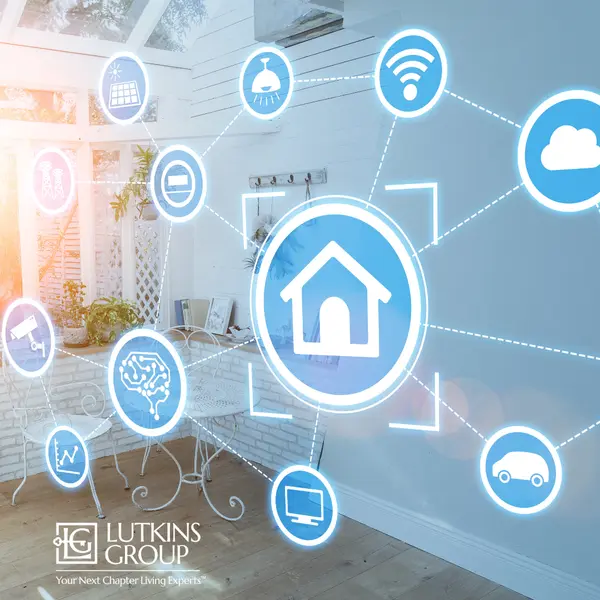
Smart-home features, wearable devices, medication reminders, telehealth, and digital communication tools can make everyday life more manageable. They may also give adult children greater peace of mind while still respecting a parent’s independence and privacy.
Technology for aging in place is most helpful when it addresses a genuine need and fits naturally into daily life. It cannot replace human connection, professional care, appropriate home modifications, or a realistic assessment of whether the home will continue to work well over time.
Start With the Need, Not the Device
It can be tempting to purchase the latest device and then determine how it might be useful. A better approach is to begin with a specific challenge someone is experiencing.
For example:
- Would better nighttime lighting make hallways or bathrooms easier to navigate?
- Is keeping track of medications becoming more difficult?
- Would an emergency alert provide additional reassurance after a fall?
- Have routine medical appointments become harder to attend in person?
Once the need has been identified, it becomes much easier to determine whether technology could provide a practical solution.
The right choice is not necessarily the newest or most advanced device. It is the one that addresses a genuine need, feels comfortable to use, and fits naturally into existing routines.
Smart-Home Features Can Simplify Everyday Life
Once installed and set up, many smart-home features can work automatically or respond to a simple voice command. This may be especially useful for someone experiencing changes in vision, mobility, balance, or dexterity.
Practical options include:
- Motion-activated lighting in hallways, bathrooms, and near stairs
- Voice controls for lights, thermostats, televisions, and compatible appliances
- Video doorbells that allow someone to see and speak with visitors without approaching the door
- Smart locks that provide approved family members or caregivers with access when needed
- Connected smoke and carbon monoxide detectors that alert designated contacts
- Water-leak and temperature sensors that provide early notice of potential household problems
- Automatic shutoff features for certain appliances
Lighting is particularly important. The Centers for Disease Control and Prevention includes better lighting and the removal of common household hazards among the steps that may help reduce fall risk.
These features cannot eliminate every hazard or make a home completely risk-free. However, when chosen to address a specific need and properly set up, they can make daily routines more convenient and help someone move through the home with greater confidence.
Wearable Devices Can Add Another Layer of Support
Today’s wearable technology does far more than count steps. Depending on the device, a smartwatch, pendant, or dedicated medical alert system may track activity, monitor certain health information, allow the wearer to request assistance, or identify what appears to be a fall.
Some devices can notify a family member, caregiver, monitoring service, or emergency responder when help may be needed. Location-sharing features may also provide reassurance when someone is away from home or at risk of becoming disoriented, provided they are used with the person’s knowledge and consent.
Wearable devices should be viewed as one part of a broader safety plan—not as a guarantee. Features and reliability vary, batteries must remain charged, and automated fall detection may not recognize every incident.
Before selecting a device, families should understand:
- Which features are included
- Whether it requires Wi-Fi, cellular service, or a monthly subscription
- Who will receive an alert
- What happens after an alert is triggered
- How often the device needs to be charged
- What personal or location information it collects
The most useful wearable is one that meets a specific need and that the person is comfortable wearing consistently.

Technology Can Make Medication Routines Easier to Manage
Following a medication schedule can become more complicated when prescriptions must be taken at different times or refilled on different dates. Technology can support an established routine and reduce reliance on memory alone.
Options may include:
- Reminders delivered through a phone, smartwatch, or voice assistant
- Pill dispensers that make the appropriate compartment available at a scheduled time
- Apps that organize medication names, instructions, and schedules
- Optional notifications to an approved family member or caregiver when a dose may have been missed
- Alerts when it may be time to request a prescription refill
These tools can help someone follow an existing medication plan, but they should never be used to change a medication, dosage, or schedule. That information should always be confirmed with the prescribing physician or pharmacist.
Before choosing a system, families should consider how easy it is to set up and operate, whether the person can use it comfortably, and what backup plan will be available if the device, internet connection, or electricity is temporarily unavailable.
Telehealth Can Make Certain Appointments More Accessible
Telehealth gives older adults another way to connect with healthcare providers without leaving home. Depending on the provider and type of care needed, an appointment may take place through a video call, telephone conversation, or secure online messaging.
The U.S. Department of Health and Human Services notes that telehealth can help older adults manage healthcare needs from home while potentially providing access to a wider range of services and specialists.
This option can be especially valuable when transportation, mobility, distance, or severe weather makes traveling to an office difficult. Telehealth may be available for routine follow-ups, medication reviews, behavioral healthcare, and the management of certain chronic conditions.
Telehealth does not replace every in-person visit. Some concerns require a physical examination, testing, or immediate medical attention. The healthcare provider can determine whether a virtual appointment is appropriate or whether the patient should be seen in person.

Technology Can Help People Stay Connected
Safety is important, but aging well at home involves more than preventing emergencies. It also means maintaining relationships, interests, and a sense of connection.
Video calls, group messages, online classes, faith-based programs, neighborhood groups, and virtual book clubs can help someone remain engaged when driving or traveling becomes more difficult.
Shared digital calendars can also make it easier for family members to coordinate visits, appointments, transportation, and household help.
The National Institute on Aging notes that social isolation and loneliness can affect the physical and mental health of older adults and offers several ways to maintain meaningful connections.
A video call is not the same as sitting together in the same room. However, it can help people maintain regular contact between in-person visits.
Adult Children Can Stay Informed Without Taking Over
For adult children, technology can provide reassurance while still respecting a parent’s independence.
A family might agree that certain alerts will be shared, such as a smoke-alarm notification, missed medication reminder, unusual temperature change, or emergency call. The important word is “agree.”
Older adults should remain involved in decisions about monitoring, cameras, location sharing, access codes, and health information whenever they are able to do so.
Before installing a device, families should discuss:
- What information the device collects
- Who can view that information
- Which situations will generate an alert
- Who will respond to an alert
- Whether the device requires a monthly fee
- How personal information will be protected
- Whether the user can easily turn the feature off
Technology should support independence—not make someone feel watched inside their own home.
Technology Cannot Correct Every Problem With a Home
A voice assistant can turn on a light, but it cannot make a steep staircase easier to climb. A fall-detection device cannot replace a secure handrail, appropriate bathroom supports, or the removal of a tripping hazard.
Technology also cannot manage extensive yardwork, repair an aging roof, or reduce the cost and responsibility of maintaining unused space.
Before deciding that technology will make aging in place possible, it is important to evaluate the home itself:
- Is there a bedroom and full bathroom on the main level?
- Can important areas be reached without using stairs?
- Are doorways and hallways wide enough for changing mobility needs?
- Could the bathroom be modified if necessary?
- Is the property becoming difficult or expensive to maintain?
- Are transportation, healthcare, shopping, and social opportunities accessible?
- Is reliable help available nearby?
Sometimes relatively simple changes can make a home work well for years. In other cases, right-sizing or moving to a home designed for easier living may offer greater independence.

A Simple Way to Get Started
Families do not need to transform a home into a fully automated space overnight. Introducing too many unfamiliar devices at once may create more frustration than confidence.
Instead, try this process:
- Identify one recurring challenge.
- Ask the older adult what would make that task easier.
- Choose one straightforward solution.
- Confirm that it is comfortable and easy to operate.
- Establish who will respond if an alert occurs.
- Test the device together under normal circumstances.
- Reevaluate whether it is genuinely helping.
Once that solution becomes familiar, the family can decide whether another tool would be useful.
People and Planning Still Come First
Technology is changing what may be possible for older adults who want to remain at home. It can improve convenience, strengthen communication, provide earlier warnings, and give families another way to support someone they care about.
But technology is still only one part of a successful aging-in-place plan.
The strongest plans combine the right home, appropriate modifications, reliable support, access to professional care, meaningful human connection, and tools that suit the individual using them.
The goal is not to create the smartest home. It is to create an environment in which someone can continue living safely, confidently, and on their own terms.
If you are beginning to consider whether your current home will support your next chapter—or whether right-sizing or a 55+ community may provide a better fit—the Next Chapter Living team can help you evaluate your housing options and determine what best supports your goals.
Categories
Recent Posts