
Tax Season Scams Are Surging: What Homeowners and Retirees Need to Know
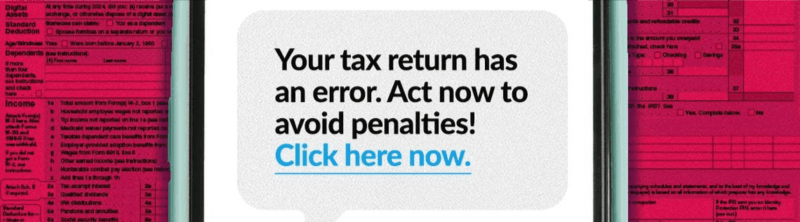
Avoid tax prep schemes, fake rebate promises, and IRS impersonators when filing in 2026
Tax season is stressful enough without the added worry of scams. Unfortunately, this time of year also brings a surge in IRS impersonation schemes, and a new change in how tax refunds are issued could make it even easier for scammers to take advantage of confusion.
Beginning this year, the IRS is moving away from paper checks and transitioning to electronic tax refunds. While this modernization may improve efficiency, it also creates an opportunity for scammers to pose as the IRS and pressure taxpayers into sharing sensitive financial information.
IRS impersonation scams are among the most common forms of tax-related fraud reported during filing season.
Understanding how these scams work is the first step in protecting yourself — and the people you care about.
How IRS Impostor Scams Work
Scammers often pose as government officials and create a sense of urgency to pressure victims into acting quickly. A typical IRS impersonation scam may look like this:
📞 Unexpected contact claiming to be the IRS
You may receive an unsolicited phone call, email, or text message stating there is an issue with your taxes.
⚠️ Threats about back taxes or legal action
The scammer may claim you owe money and must pay immediately to avoid penalties, arrest, or other legal consequences.
💳 Requests for unusual payment methods
They may demand payment through wire transfer, cryptocurrency, or gift cards — all major red flags.
💰 Fake refund opportunities
In some cases, scammers will say you’re owed a refund or rebate and ask you to click a link or provide banking details to “update your refund information.”
📱 Fake rebate or stimulus messages
Scammers may send text messages claiming you qualify for a tax rebate or stimulus payment and ask you to “verify” your information through a link. These links often lead to convincing fake IRS websites designed to steal Social Security numbers, banking details, and other personal information.
How the IRS Typically Communicates With Taxpayers
The IRS follows very specific communication procedures, and understanding them can help you recognize a scam.
- The IRS typically contacts taxpayers by mail first.
The agency generally sends a letter before reaching out through any other form of communication. - The IRS does not demand immediate payment over the phone.
- Federal agencies never request payment through wire transfer, cryptocurrency, or gift cards.
- If direct deposit information is missing from a tax return, the IRS will send a letter requesting the necessary details — not a phone call.
If someone contacts you claiming to be from the IRS and pressures you for urgent payment or personal information, it is almost certainly a scam.

Steps You Can Take to Protect Yourself
If you suspect an IRS impostor scam, take the following steps:
☎️ Do not engage with the caller
If you receive a suspicious phone call claiming to be from the IRS, hang up. Better yet, let unknown numbers go to voicemail.
🔍 Verify information independently
If you have questions about your tax status, contact the IRS directly using the official phone number listed on IRS.gov or through your IRS Online Account.
📅 File your tax return early
Filing as early as possible can reduce the opportunity for criminals to file a fraudulent return using your Social Security number before you do.
🔐 Consider an IRS Identity Protection PIN
Tax identity fraud is becoming increasingly common. An Identity Protection PIN (IP PIN) adds an extra layer of security by requiring a unique number when filing your tax return.
Why Awareness Matters
Many of the homeowners and families we work with at The Lutkins Group are navigating major life transitions — downsizing, rightsizing, retirement planning, or life after loss. These moments often involve financial decisions, paperwork, and situations that can make people more vulnerable to scams.
Fraudsters don’t just target bank accounts — they target trust and uncertainty.
By staying informed and sharing information like this with friends and family, we can help protect the people and communities around us.
💡 A simple reminder:
If someone pressures you to act immediately, requests unusual payment methods, or claims to be the IRS but hasn’t contacted you by mail first — pause and verify.
Your next chapter should be built on confidence, clarity, and security.
If you found this helpful, consider sharing it with a friend, parent, or neighbor. Awareness is one of the most powerful tools we have to prevent fraud.
Categories
Recent Posts